

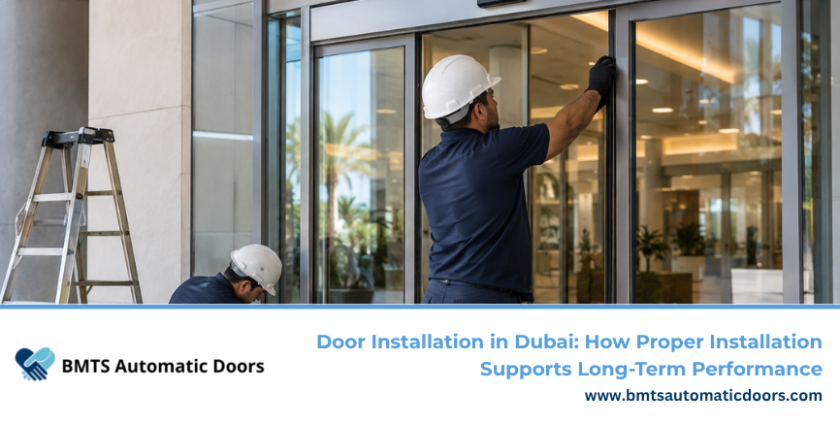
Doors in high-traffic commercial and residential properties undergo continuous daily use, making correct setup essential for reliable performance. Even the highest-quality door system can experience operational failures, premature wear, or inefficiency if it is improperly measured, aligned, installed, or configured. Precise positioning during setup ensures seamless opening and closing cycles, enhances structural durability, maintains user safety, and preserves a refined architectural aesthetic.
Whether managing a bustling retail entryway or a modern residential complex, professional automatic sliding door and door installation in Dubai plays a pivotal role in ensuring optimal functionality and long-term value. Proper alignment protects delicate motorized components, prevents unnecessary strain on frames, and optimizes energy efficiency by maintaining airtight seals. Investing in qualified expertise guarantees that entryways operate safely, function efficiently, and maintain their high-end look throughout years of demanding daily operations.
Why Proper Door Installation Matters for Long-Term Performance
Installation is far more than simply fitting a door into an opening—it forms the core foundation of daily reliability, architectural integrity, and operational safety. Proper execution directly impacts several critical areas:
- Smooth Opening and Closing Cycles: Prevents mechanical friction, drag, sticking, and unwanted resistance during continuous operation.
- Precise Door Alignment: Balances weight distribution across frame structures, eliminating severe mechanical strain and off-center track wear.
- Structural Stability: Protects the surrounding building frame from structural shifting, misalignment, and stress cracks over time.
- User Safety Assurance: Mitigates operational risks such as unexpected drops, sudden jams, or sensor blind spots that could cause injuries.
- Long-Term Component Performance: Extends the lifespan of delicate hardware, including hinges, tracks, drive rollers, and motors, minimizing expensive repairs.
Automated doors combine electrical motion sensors, motor operators, and complex physical hardware. Expert technicians are essential to calibrate accurate sensor detection areas, fine-tune drive-belt tension, and configure safety thresholds—guaranteeing smooth, efficient, and reliable long-term performance.
What Goes Into a Professional Door Installation in Dubai?
What actually happens before a new door starts operating? A professional door installation in Dubai involves much more than placing a door into an opening and securing it. Installers need to consider the building structure, available space, door configuration, traffic flow, and operating requirements before the final fitting begins.
Think of it as a step-by-step process: measure the space, choose the right configuration, prepare the site, install the system, and then test its operation. Each stage helps prevent problems such as misalignment, restricted movement, unnecessary wear, or poor day-to-day performance.
Accurate Measurements Before Installation
The first question is simple: Will the selected door actually fit and operate comfortably within the available space?
Installers measure the width and height of the opening while also checking the clearance above, below, and around the frame. These measurements help determine the appropriate door size and configuration.
But measurements are only one part of the check. The installation team also looks at:
- Whether the wall or surrounding structure can support the door and its hardware
- Floor levels and possible uneven surfaces
- Available space for panels to slide or swing
- Potential obstructions around the opening
- Alignment of the installation area
Why does this matter? If the floor is uneven, for example, a sliding panel may not move as smoothly as expected. Similarly, an unsuitable mounting surface can affect the stability and alignment of the system over time.
Preparing the Installation Area
Here’s a step that is easy to overlook: site preparation.
Even a well-designed door can experience installation problems if the surrounding area isn’t ready. The opening is checked for squareness and consistency, while the mounting surface is inspected to ensure the frame and associated hardware can be securely installed.
For an automatic system, installers also consider the electrical requirements before fitting begins. Preparing these provisions in advance can help prevent unnecessary interruptions once installation is underway.
The surrounding operating area is checked too. Ask yourself: Can the door move through its complete operating cycle without hitting, catching, or obstructing anything nearby?
Once these details have been addressed, the installation team has a properly prepared foundation for fitting and configuring the door system.
Selecting the Right Automatic Sliding Door Configuration
Once the opening has been assessed, the next question is: What type of configuration makes sense for this particular entrance?
There isn’t necessarily one configuration that works for every building. A single sliding system may suit a smaller opening, while a bi-parting arrangement for a sliding glass door in Dubai can provide a wider passage where floor area and traffic requirements call for it.
Installers consider factors such as:
- Opening size: How much space is available for the door panels?
- Traffic levels: Will a few people use the entrance each hour, or will it handle continuous movement?
- Accessibility: Does the entrance need to accommodate people with mobility requirements?
- Operation: Would manual operation be sufficient, or would an automatic system be more practical?
- Building use: Is it for a residential property, office, retail space, hotel, or another commercial environment?
The goal is to match the configuration to the way the entrance will actually be used rather than simply selecting a door based on appearance.
How Installation Quality Affects an Automatic Sliding Door
Unlike a standard manual door, an automatic sliding door relies on an integrated network of electrical, mechanical, and motion-sensing components that require pinpoint precision during setup. Even subtle positioning errors can disrupt automated functionality, leading to premature component failure and operational delays.
Key elements that demand meticulous technical attention during any sliding glass door installation include:
- Track Alignment & Door Panel Positioning: Precision leveling of top tracks and panel alignment prevents uneven friction, dragging, and off-center track wear.
- Motor & Operator Assembly: Proper mounting and calibration of the motor unit ensure smooth energy transfer without placing undue strain on drive belts or gears.
- Sensor Positioning: Strategic placement and angle calibration of activation and safety sensors eliminate blind spots and ensure timely responsiveness.
- Control Settings & Speed Tuning: Fine-tuning parameters such as opening/closing speed, hold-open time, and soft-stop braking ensures safe, efficient passage.
When an automatic sliding door suffers from poor alignment or faulty configuration, the increased mechanical resistance forces the drive motor to work harder, accelerating wear on rollers, belts, and electronic controllers. Once setup is complete, rigorous testing through full operational cycles is essential to verify safety compliance, sensor accuracy, and long-term performance.
Safety Considerations When Installing Automatic Door Systems
Automatic doors bring convenience, but safety has to be built into the installation from the start. Proper sensor placement, correct operating settings, and reliable emergency access all play a role in keeping the system safe for daily use.
Sensor Positioning and Detection
Sensors need appropriate positioning to reliably detect users entering or exiting. This means accounting for the direction of approach, the width of the opening, and the presence of side traffic or nearby obstacles. Poorly placed sensors can lead to delayed detection or doors that close too early, so installers typically test detection range and angle carefully before finalizing placement.
Opening and Closing Settings
Movement speed and operating settings should suit the specific location and how the door will be used. A busy entrance may need different timing than a low-traffic side door. It’s also important to test the system under normal usage conditions, observing real foot traffic patterns rather than relying on default factory settings alone, to confirm the door responds smoothly and safely.
Emergency and Manual Operation
The installation should account for appropriate access and emergency requirements applicable to the building and door system. This includes ensuring the door can be operated manually if needed, such as during a power outage, so occupants are never left without a safe way in or out.
Common Installation Mistakes That Can Affect Door Performance
Even a high-quality sliding glass door in Dubai can experience operational issues if the installation is not carried out carefully. Small errors during fitting, adjustment, or testing can affect how smoothly the door operates and how reliably it responds to users.
Even a high-quality automatic door system can experience operational issues if the installation is not carried out carefully. Small errors during fitting, adjustment, or testing can affect how smoothly the door operates and how reliably it responds to users. Understanding these common mistakes can help businesses and property owners identify what should be checked during installation.
- Incorrect sensor placement: Poorly positioned sensors may fail to detect approaching users consistently, causing delayed opening or unnecessary door movements.
- Improper door alignment: If the panels are not correctly aligned with the track or frame, the door may move unevenly, create excessive noise, or place additional strain on operating components.
- Incorrect opening and closing settings: Unsuitable speed or timing settings can affect smooth movement and make the entrance less practical during periods of frequent use.
- Skipping post-installation testing: Failing to test the system under normal usage conditions can leave detection, movement, or control issues unnoticed until the door is regularly used.
- Ignoring the surrounding space: Furniture, walls, fixtures, or other obstacles near the entrance can interfere with door movement or sensor detection if they are not considered during installation.
- Poor consideration of manual operation: If manual access or relevant controls are difficult to reach, operating the door when automation is unavailable can become unnecessarily complicated.
A careful installation process should therefore cover both the physical fitting of the door and the setup of its operating components. Checking alignment, sensor response, movement settings, surrounding conditions, and manual operation can help create a more consistent and practical entrance system.
Proper Installation Supports Reliable Door Performance
A high-quality automatic sliding door is only as effective as its installation. From taking accurate measurements and maintaining correct alignment to selecting suitable hardware, positioning sensors properly, and completing post-installation testing, each detail can influence how the system performs in everyday use.
Professional door installation in Dubai helps ensure that the selected system is suited to the building layout, traffic levels, operating requirements, and available space. For glass-based entrances, choosing the right sliding glass door in Dubai is equally important, particularly when balancing visual appeal with practical movement and usage needs.
Looking for a door system that combines smooth operation, practical functionality, and a modern appearance? Speak with BMTS Automatic Doors to discuss your requirements and find a suitable solution for your space.
- By: admin" >admin
- Category: Automatic Doors Dubai
- 0 comment
Leave a Reply